

Please write to me!
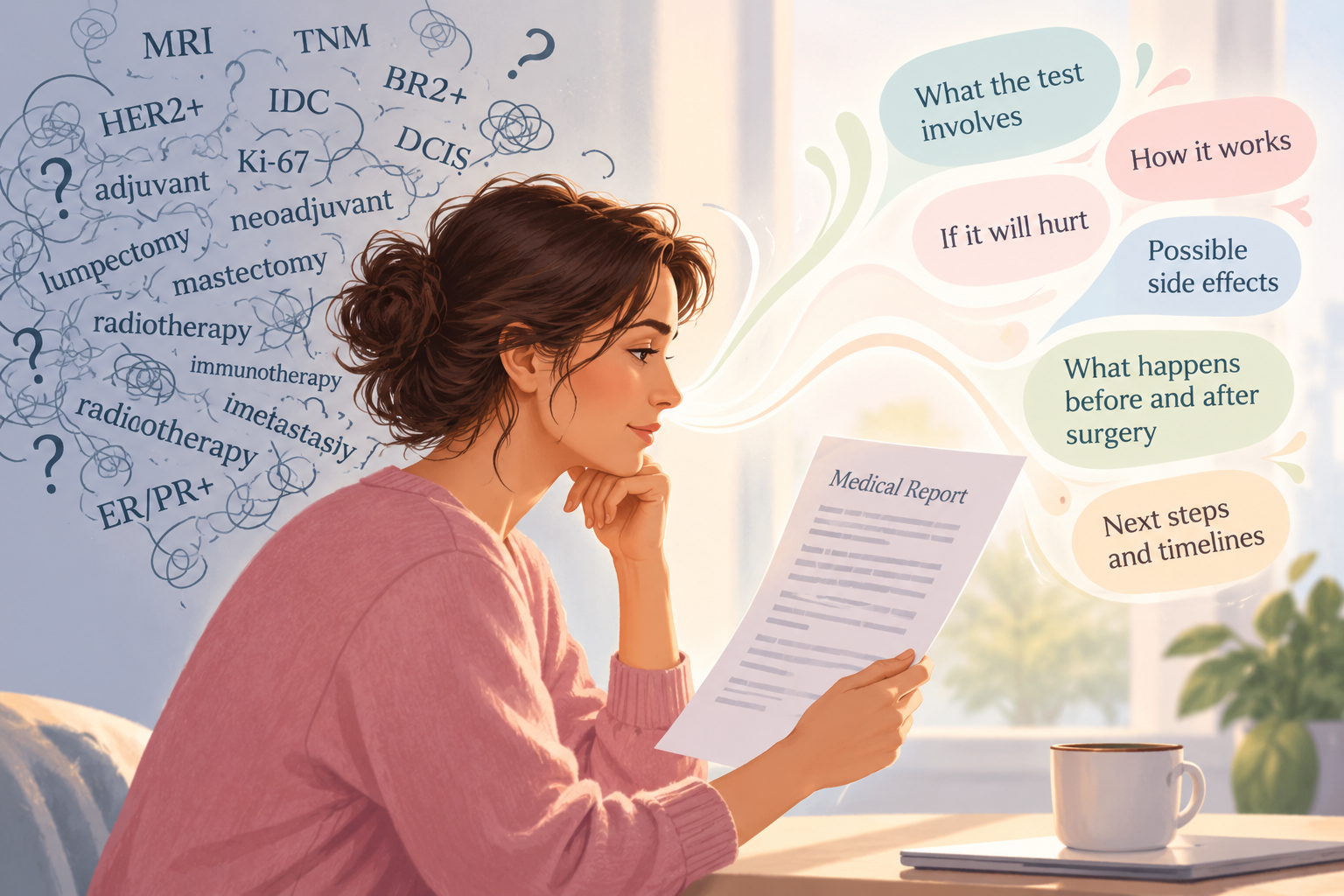
As a translation agency that deals with numerous medical reports on a daily basis, what I find remarkable is that it often seems that scant regard is given to the patients themselves. Rather, my impression is that doctors are writing notes to each other. In this post, I thought I would examine some steps that are being taken to make communications with patients more accessible to them.
As mentioned in the introduction, most of the medical reports we translate seem fairly incomprehensible to the person who matters the most: the patient. To the extent possible, we do try to make these reports as patient-friendly as possible, for example by giving the full forms of any abbreviations and acronyms that appear in them. Ultimately, one would hope that the practitioner who interprets these reports gives the patients concerned a clear understanding of their condition, treatment and prognosis.
However, there is some ray of hope on the horizon, as seen in some interesting developments in this area in countries such as the UK and Australia. In the UK, some hospitals and outpatient departments are adopting a new stance as to how the results of any tests and visits are reported, based on an initiative called ‘Please Write to Me’. Traditionally, any reports written by specialists about a patient would be sent to the patient’s GP, and with any luck would eventually also be sent to the patient. It would be the GP’s job to interpret test results for the patient in a way that the patient could understand them. Under the new approach being taken, the specialist in question sends the report directly to the patient first and then forwards it to the GP. Clearly, as the patient receives the report first, it must be in a language that the patient can understand. In addition, patients will receive a letter addressed to them rather than being talked about in the third person. Some letters might even start “Dear Mr Smith, it was a pleasure to meet you when you came to the Cardiology Outpatients’ Department last Tuesday”. Although still not widespread, it has been shown that patients appreciate this approach more than the old one.
As the main instigator of this initiative has pointed out, the reluctance of many doctors to write in plain English stems from the fact that it is much harder to do so than to write in the medical jargon they have become used to since their time at medical school. Some clinicians even go as far as to say that writing directly to patients may cause them unnecessary anxiety, whereas most people undergoing treatment say that they would rather know than not know what their medical problem entailed. Perhaps it is time for doctors to learn from their patients.
A further development in the UK is the overhaul of the NHS website. I was surprised to learn that the average reading age of the general population was around 9–11 years of age. Therefore, the aim of this review is to make the information on the website accessible to most of the population. Thus, you will find content such as “… your food pipe, which your doctor may call the oesophagus”. Note the subtlety of using the lay term first followed by the medical terminology, rather than the other way around. It also advocates avoiding the use of abbreviations, firstly because some people do not fully understand them and, secondly, because people who have difficulty reading or have limited sight may use screen readers to have information read to them. It was found, for example, that this software could interpret “e.g.” as “egg”, so the recommendation is to use the expressions “such as”, “for example” and “like”.
In summary, it seems that the medical profession is finally coming to the realisation that although the general public relies on this collective for its expertise we really would appreciate having our diagnoses explained in a language that we can all understand and ultimately feel that we are being put first, rather than treated as impersonal, unfeeling objects.

Philippe Waller
In-house translator at Interglossa


